AIQuity Life · Learning
Build capability. Prove you have it.
New models, tools and frameworks arrive every week.
Reading about them is not the same as being able to use them.
AIQuity Learning is built around that gap.
You work the real model, then prove what you can now do with it.
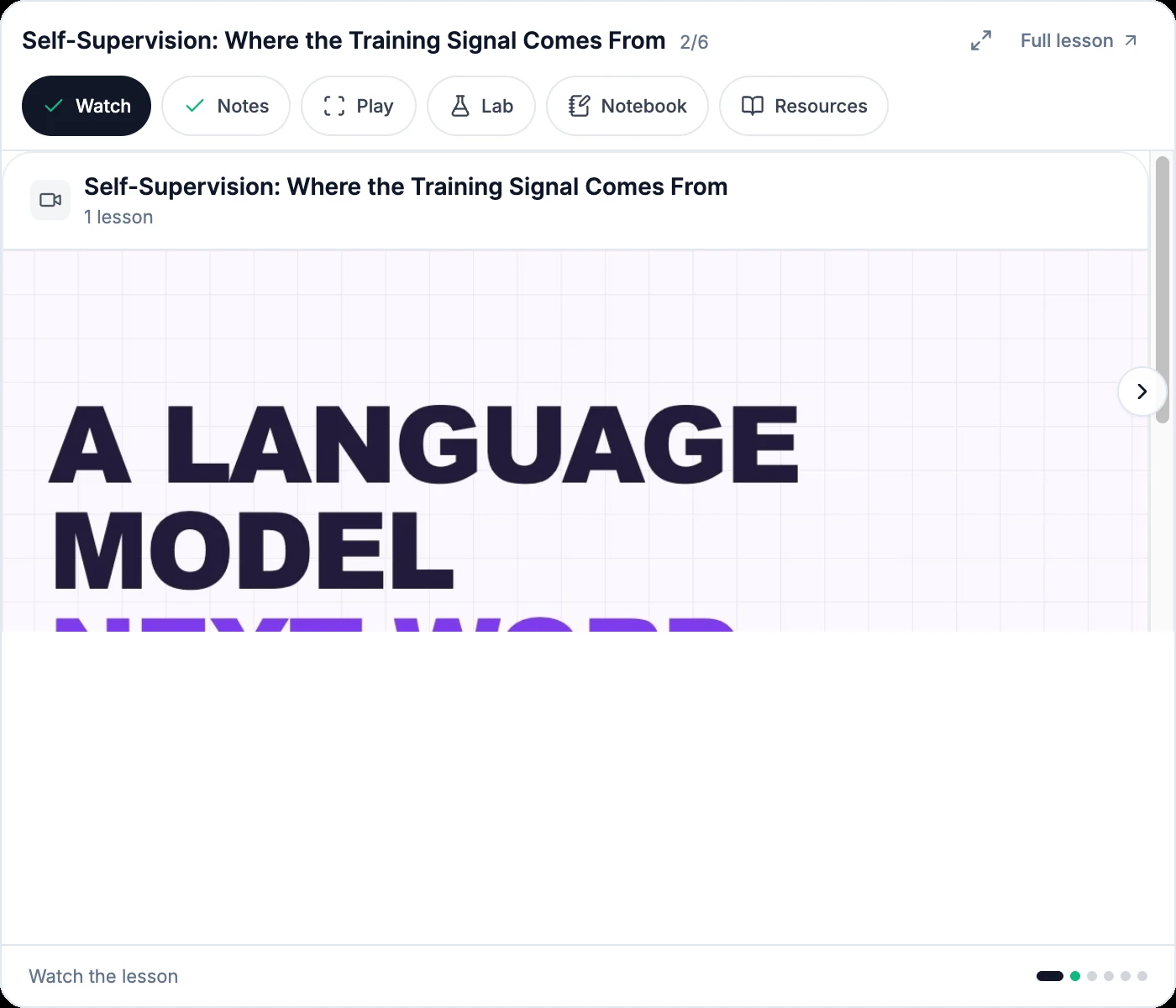
One topic. Video, notes, interactive models and labs in one workspace.
The method
Capability gained per unit of attention.
Your attention is the scarce resource.
We don’t measure learning by hours watched.
We decide what deserves explanation, what deserves practice, and what you can safely skip.
- 01
First principles, not the update diary
Learn the structures new models, tools and frameworks attach to. An update becomes something you can place, not another thing to memorise.
- 02
Compression, not long lectures
A topic is usually about ten minutes. Enough to build the model. No incentive to stretch a clear idea into an hour.
- 03
Every topic is atomic
One topic answers one question. Open it when you need it, finish it, or move on.
- 04
Permission to skip
Already understand it? Prove it and move forward. A curriculum should tell you what matters without forcing you to consume everything.
- 05
Build your own judgment
Not dependence on an educator. Understand the field well enough to evaluate new systems and decide what deserves your attention yourself.
Topic one understanding
One idea, one understanding. Small enough to finish in a sitting.
Cluster one capability
A few connected topics become one capability.
Path one usable skill
Clusters in sequence become a usable skill. It carries a contract you can check yourself against, and skip.
Start with the smallest thing worth understanding. Compound only when it is useful.
Topic
The Context Window: How Much It Can See at Once
Cluster
What the Machine Actually Reads
Path
What is an LLM? The Transformation Lifecycle
The curriculum is a map, not a queue.
See what you need, what it connects to, and what you already know. Start anywhere the structure allows.
How we implement it
One idea. Six ways to meet it.
Learning that survives a working week is not one long sitting.
One idea moves through the six below, plus your Notebook and its Resources.
The first move costs nothing, and there is room to forget a little in between.
- 01While travelling, cooking, waiting
Watch
Start with the educator’s explanation. No note-taking required. First build the intuition.
- 02Later, in about three minutes
Notes
Come back to the idea in a few minutes of structured reading. The argument, the terminology, the connections.
- 03Two minutes, on a phone
Play
Change an input and watch the system respond. Turn an explanation into something you can manipulate.
- 04When the topic has one
Lab
Run the mechanism itself. Step through it and inspect what changes.
- 05On the platform, signed in
Build
Take the idea onto the platform and use it on work that is yours, not a sandbox exercise.
- 06At the end of a path
Prove
Check yourself against the skill contract, and read back what your agent actually did.
Not every idea needs every stage. The medium follows what has to be understood.
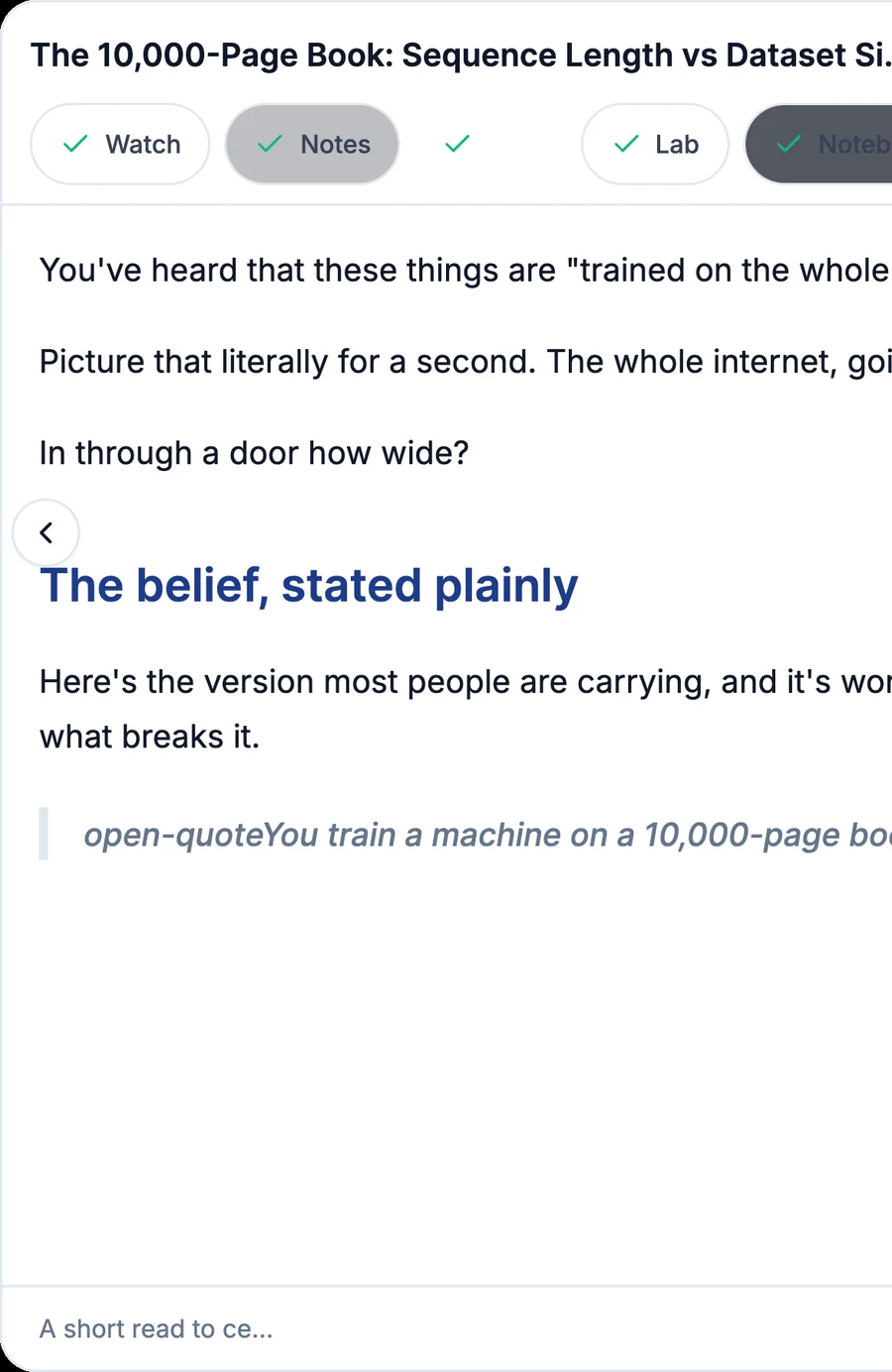
You’ve read enough about the method. Try it.
One real topic, running in the browser. You work the model, not a slide about it.
Open a live atomThe proof
Don’t take our word for it. Run the model.
First, understand the model.
Tokenizer → Embedding → Attention → FFN/MoE → LM Head → Sampler. Training and serving layers around them.
Then see where the model sits inside an agent.
Instructions + History + Tools + Context → Model → Decide → Act → Observe.
Then see how agents become a system.
Goal → Orchestrator → Workers → Shared memory and context → Result.
Context windows, MCP, tool calling, orchestration, multi-agent systems.
Stop memorising them as isolated terms. See where each one belongs.
The curriculum
A map of Agentic AI, from the model upward.
Start with what an LLM actually does.
Move through agents, tools, context, memory and orchestration into autonomous systems.
Go deeper where your work requires it.
Explain an LLM end to end, from training data to token-by-token generation, without hiding behind “AI magic.”
Already know this? Prove it and skip.
Follow-along launch: not every topic is live yet. A new one lands roughly every 10 days, with its video, a playground, projects and extra material.
Explore the Agentic AI mapInside a topic
Everything one idea needs, and nothing it doesn’t.
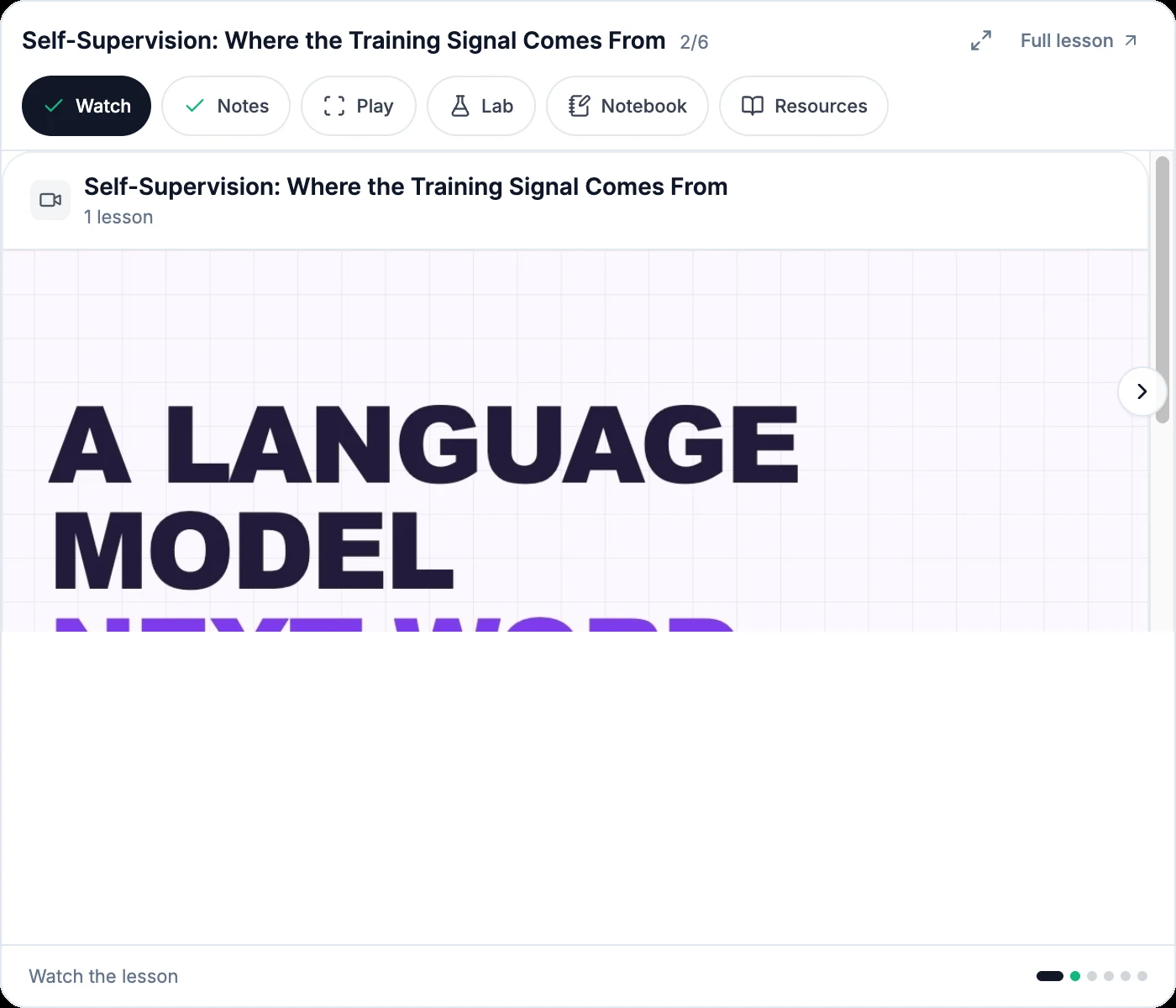
The educator’s video
Short, recorded for the topic, watchable on a phone. The entry point for every atom.
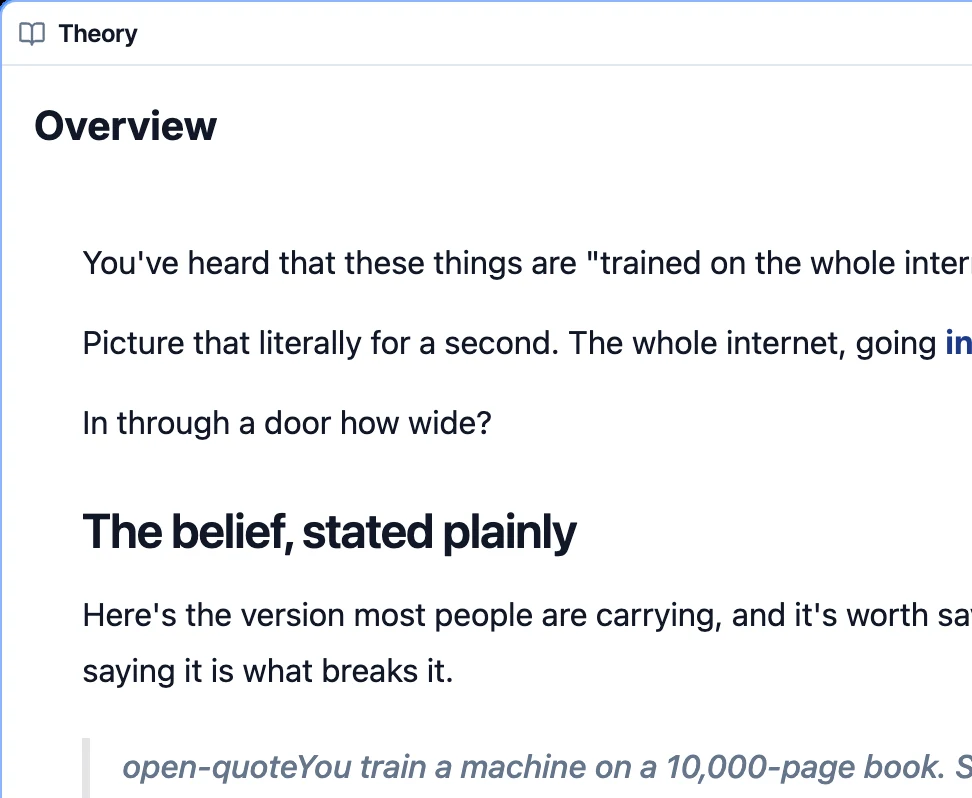
Notes
About three minutes of reading. It lands the video again and adds what words do better.
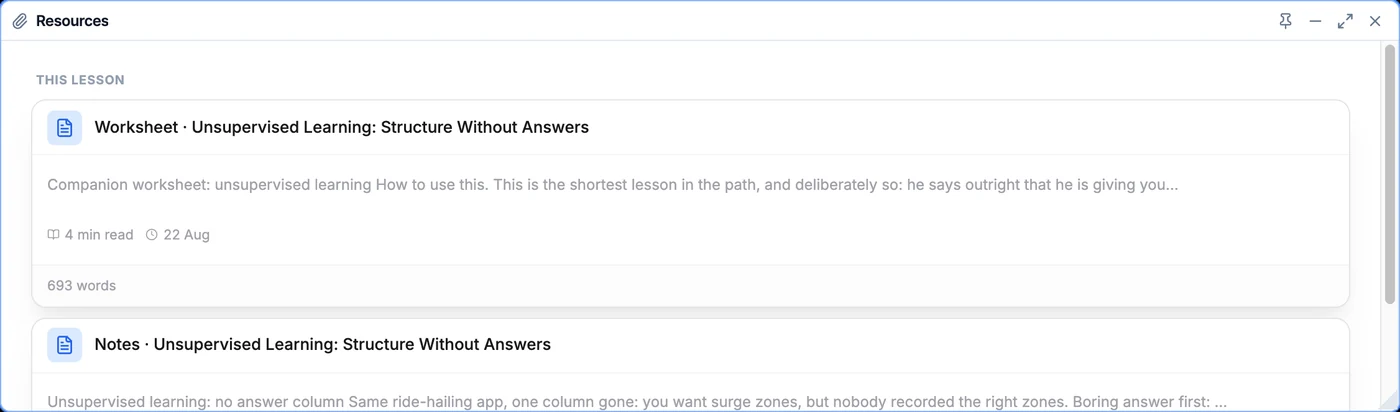
Knowledge resources
The educator’s drawings, artefacts and references, attached to the topic they belong to.
Skills you can practise
Interactive visualisations: change an input, watch the output move, keep the instinct.
Try one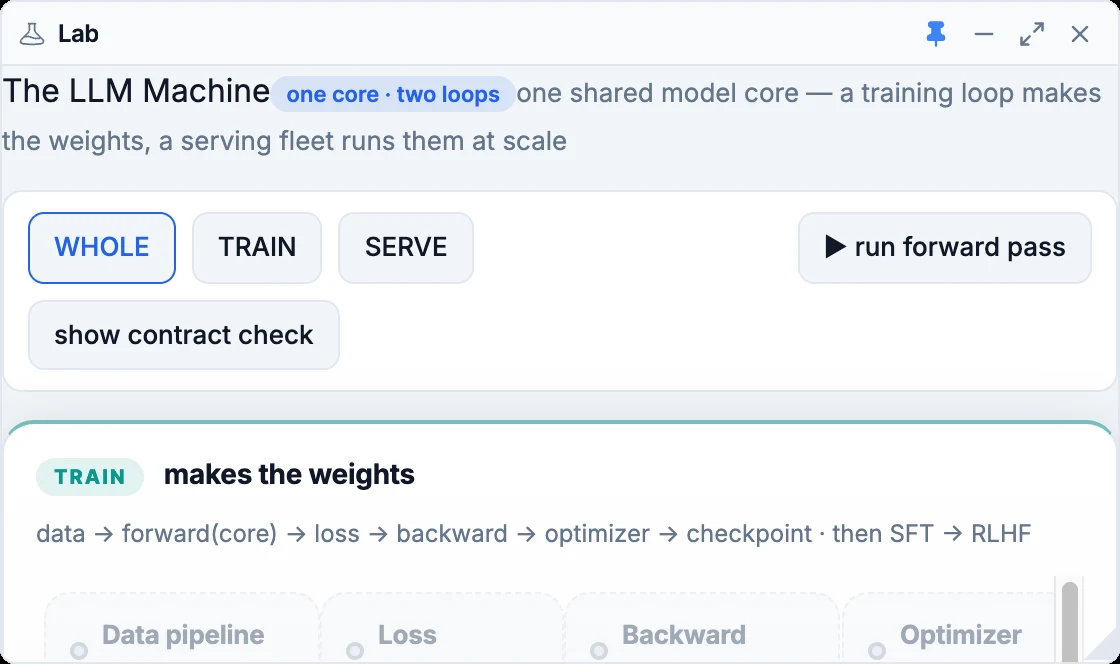
Labs
Real instruments that show the mechanism, not its result. Labs run local models in the desktop app.
Projects on the platform
Compose an agent in Pattern Studio, wire its tools and skills, read the trace of what it did. Real work, not a sandbox.
The playground
One topic. One workspace. Everything beside it.
Video, theory, visualisation, lab, notebook, resources and your learning agent, all attached to one idea.
Open what helps. Ignore what doesn’t. Pin, minimise, maximise, undo a layout.
Juggernaut is a window like the others. It reads the topic you are on and asks before it changes anything.
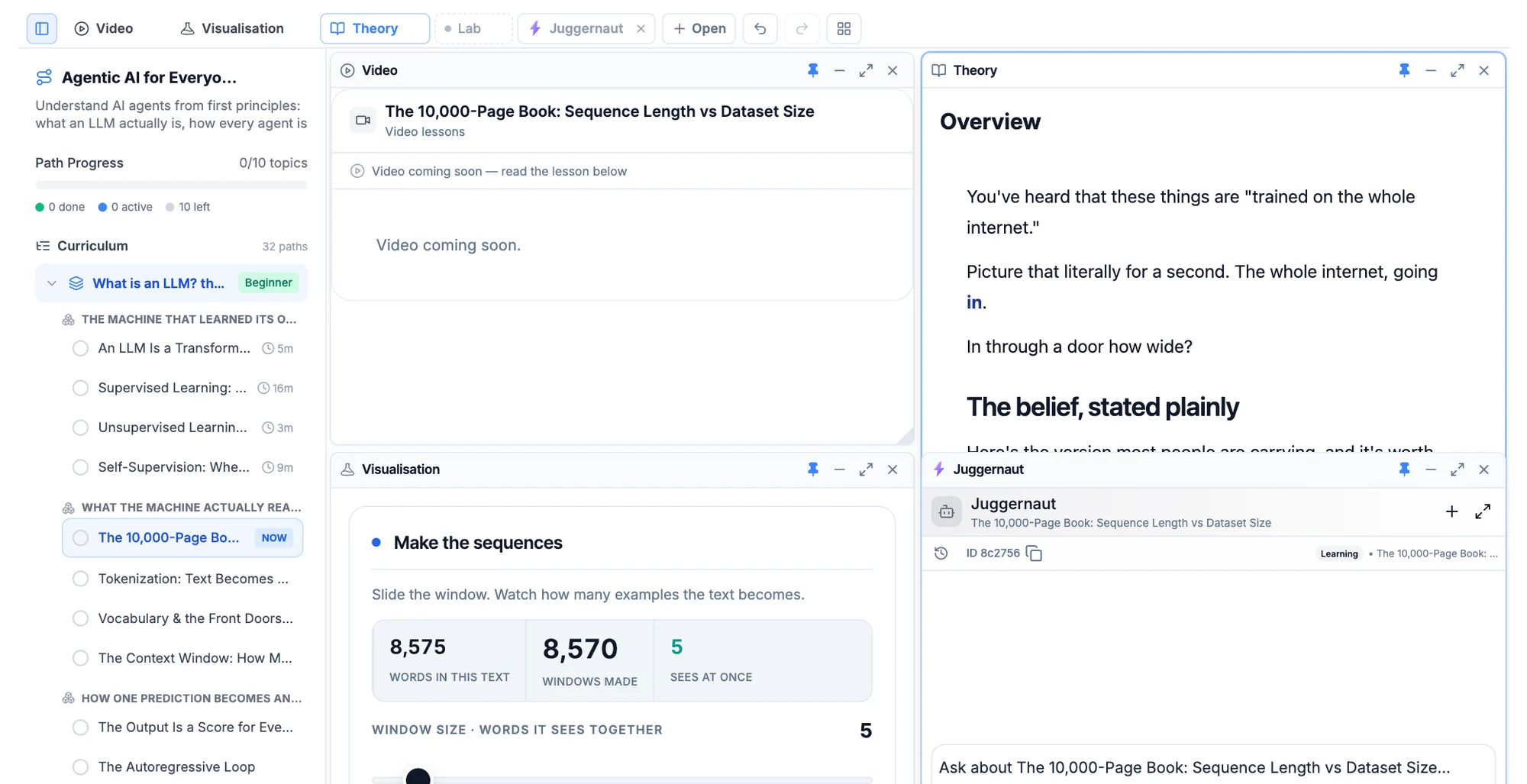
- Knows the topic you are on
- Drives the visualisation on request
- Asks before structural changes
- One thread per topic, kept
Atoms for busy days
Bottom-up. Start anywhere, finish something.
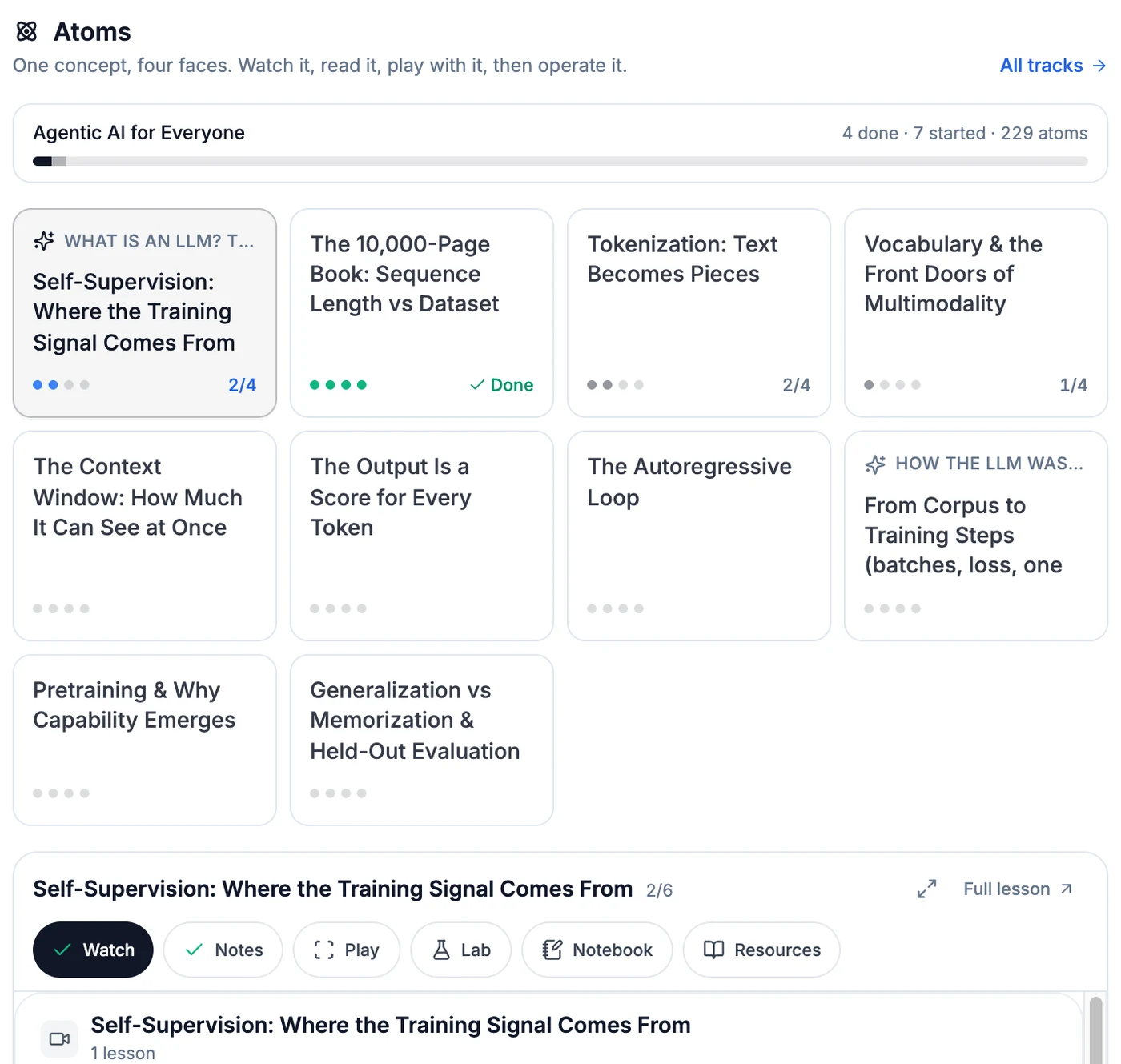
Home opens on the atoms of your track, grouped by path, each with its face-dots and a Done mark.
Pick one and the Atom below swaps: Watch, Notes, Play, Lab, in that order.
On a phone, in a gap in the day.
- 01By pathAtoms sit under the path they belong to, in true curriculum order.
- 02Four dotsEach card shows which faces you have seen; Done when all four are.
- 03One trackThe track’s own progress line at the top: done, started, total.
- 04Full topicOne click from the atom into the full workspace for that topic.
Start with one topic.
One-time purchase for the whole curriculum, yours forever.